



Posts Tagged ‘clear’

Answer the question when replying

Thursday, October 13th, 2011

One simple way to improve your business communications is to ensure that every email you send in reply to anyone (staff, suppliers, customers and even friends and family) actually serves you both well.

So if someone has taken the time to ask you a question, make sure you answer it, and answer it clearly, when you reply. Sounds obvious but as it often doesn’t happen, it is worth checking before you hit send…

  1. read their email again – did you miss a second question? Are you sure you understood the real question being asked?
  2. does your answer stand alone? That is, did you give a full answer that anyone could understand – there is nothing worse than an email “Dear Fred, the answer is yes. Regards, Barney”. “Dear Fred, Yes we do deliver to Devonport. Regards, Barney” is much more effective as Fred doesn’t have to remember or think about what his question was.
  3. is your answer as simple and clear as possible? “Yes we do deliver to Devonport” is much better than “Yes, we deliver to all major cities in Australia” (is Devonport considered a major city?) or “Our delivery areas are all listed on our website and we cover most parts of Tasmania and Queensland” (how is Queensland relevant? Why couldn’t you give a direct answer?)
  4. if you can’t answer the question, say so rather than be obscure or ignore the question. I know I would prefer to hear “I’m not sure but will find out for you” or “we haven’t done that before so I’ll have to ask my manager to call you back” rather than having to ask again or risk making a guess.
Not only are clear replies to questions a good communication strategy, they can save you (and those you email) time and frustration.

Decluttering your blog

Saturday, June 18th, 2011

Last week I found a blog post I just have to share – Skelliewag gives 50 tips for decluttering your blog (yes he posted this list a while ago, but it still applies as far as I’m concerned!)

He raises some great points, such as not including stats (as you rather than your readers care about them) and irrelevant social media conversations in your side bar. And I love his suggestion of having a traditional links page if you really want to list a lot of blogs somewhere.
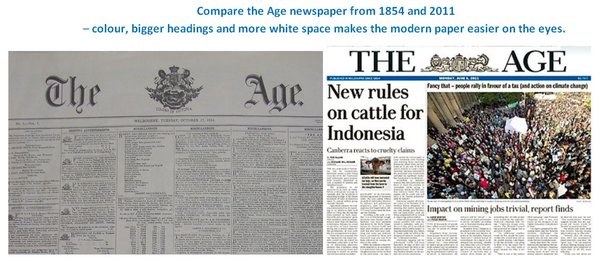
Why declutter a blog? Having less stuff around your writing gives more white space and less visual distraction – maybe I’m biassed, but I think that is better for highlighting your content. I do think about where to put things on my plug and avoid having too many plugins, but I hadn’t thought of decluttering like this before reading Skelliewag’s post.

One interesting point was to have a categories/tags cloud OR a categories/tags list – not both. I think that both is excess information, especially if you want to declutter and have more clear space around your blog. Personally, I would choose the list because it takes less space and is visually less cluttered than the cloud. On top of that, the cloud is based on bigger text on most popular words/phrases meaning that those words will give you a long list of posts to search through if trying to find something specific. Have you ever clicked on one of those clouds to find anything anyway? I know I haven’t (in fact I actively ignore them, but that’s just me!)

And I like the logic of getting rid of any advertising that doesn’t really pay well – it is nicer for readers to see fewer ads and does make the remaining ones more effective. I find a lot of ads in a blog distracting and prefer to see a clean page focussed on the content, so it makes sense to me to use fewer ads.

Most of his points already apply to my blog, phew! I will review the rest of his list and make decisions on whether to keep or lose some details. So if you think my blog is too cluttered or want something removed, now is the time to tell me!

Make it clear what you do

Saturday, February 12th, 2011

What does your business do? Would I be able to answer that question after reading your website or brochure?

You may be surprised that many businesses do not clearly state what they don on their website. Some just assume everyone knows, others try to be clever and use fancy words and others appear to like being mysterious and/or aloof. And that’s not counting those sites that try to tease and get your details before they really disclose anything - I just can’t trust that sort of site.

Why do I think it is important to be clear about what you do?

  • make life easy for your potential clients – clarity saves them guessing or searching for the information
  • using the appropriate words (i.e. keywords) will help search engines find and rank you
  • save yourself being contacted by people who are after something you don’t offer
  • it builds credibility – you are open and honest rather than trying to be impressive

Some people argue that effectively hiding information throughout the site means people have to read more pages to find their answers (for example the home page, about us page and services page to find out if you offer what hey want). My answer to that is that many people won’t  bother and will look elsewhere, and even if they do, is wasting a client’s time showing them much respect or valuing them at all?

So how can you make this clear?

  • add an informative tagline to every page of your site
  • make it the first sentence on your site for real clarity
  • use commonly accepted words to describe your services at least once – if you use unusual terms by choice, perhaps simplify it on your about us page
  • have a list of your services if there could be doubts. For instance, a beautician might list she offers waxing, facials and manicures but not pedicures and a legal firm might list they do contracts, employment agreements, family law and business advice (the implication being they don’t do criminal law)
  • note who you service. My tagline is ‘for all your business writing needs’ which clearly shows I write for businesses rather than writing fiction or being a journalist
  • be specific “we help people” doesn’t say much but “we help homeowners prepare for sale” and “we help families care for their elderly loved ones” are much more informative (to humans and search engines)

So maybe look at your materials again and think about whether you are clearly stating what you do.

Give options that make sense

Wednesday, November 4th, 2009

I have written before about the need to use clear questions in surveys to get meaningful results, and given some tips on how to write such questions. Every time I do a survey with poor questions I cringe – do they really not care about getting good results or just don’t understand that not everyone knows what they are really asking?

One of the most common questions I have seen in online surveys is the following:

Are you …

male
female?

Technically, the answer is yes  – I am male or female and so is every other human I know of! Fairly pointless question to ask unless you have a third group responding.

In this case, we can see what is really being asked (“which are you?”) and the available answers lead us to answering correctly, but it isn’t always so easy.

It was great recently to be asked to help a major research centre refine their questionnaire. They had determined the questions they wanted to ask but understood that how they asked was critical to the final result of their research.

So if you are preparing surveys or questionnaires, my two key tips are:

  • read the questions to make sure the options answer the question and suit your needs
  • get at least one other person to read the questions to ensure they make sense to a less involved pair of eyes

Use your words wisely!

Clear and repeated communications

Friday, July 24th, 2009

Again, I am continuing on with a discussion of the Edelman Trust Barometer from February this year. (You can read the business trust and blog trust posts for background.)

Their media release states “Swift and accountable communications: Respondents said they need to hear information 3-5 times before they believe it. Companies should inform conversations among the new influencers on blogs, in forums, and bulletin boards. Australians under 34 are twice as likely to share both positive and negative information about a company online as their older counterparts – this trend will only grow. ”

The repetition of a clear message is important in getting people to trust you (your business) and accept that message. For example, any good presenter/teacher will summarise key points at the end of a topic as that helps others absorb that information.

When planning some marketing, remembering that people like to hear a message 3 – 5 times (and many have long said 7 times) before buying it means:

  • you may not get great results from your first attempt at marketing
  • consider how you can present your message in multiple ways rather than spending your budget on one ad
  • use images and layout to enhance your message – a stronger message may need less repetition than a hidden or weak message
  • every interaction you have with people in your demographic (and beyond) can reinforce or damage that message so make sure all ads, blogs, your website, your business card and so on are consistent, professional and appropriate for the purpose

Prompt communication is important in this information age – discussing an event well afterwards must be managed carefully so it doesn’t appear you are out of date. For instance, I could write that people affected by the February 7 bushfires are rebuilding and still need support all year but just writing ‘donate to the bushfires’ now looks very old.

Blogs, emails and social media are obviously key ways to making communications immediate and relevant – which is why I find it hard to believe they aren’t trusted forms of communication.

Clear definitions…

Friday, July 24th, 2009

I looked at a website today that is trying to explain technical terms to enhance their sales – a good concept of course, but if the definitions aren’t clear I think they’d be better off without them.

This is pretty much the first thing on their site:

What is “Domain Name”?
Compared with IP address, Domain Name is a character sign which is like a doorplate number on internet, it’s used to identify and orient hiberarchy of computer on internet.

Ok, English isn’t their first language, but their site is in English so it needs to be understandable in English! Even if we change ‘hiberarchy’ to ‘heirarchy’ it still doesn’t help explain a domain name – and I actually know what a domain name is!

Moral of this story – make sure a definition is easier than the term it is meant to explain! I suggest using the simplest words possible when writing  definitions so people can concentrate on the definition rather than the words you use.


P.S. Try my article for a longer but simpler explanation of domain names.

The value of clear communications!

Saturday, July 5th, 2008

I have recently being working through a training book (as a student, not a writer) and found various bits hard to understand. Luckily, I have a group of people around me who have been able to help interpret some of the questions – and I have interpreted other bits for them! I would hate to be struggling through it alone!

One question I thought I understood and prepared an answer for – it took me half an hour or so to get it finished and involved someone else getting some restricted information for me.

At the training course itself, my tutor read through my bookwork and pointed out that the question above was not correctly answered – it was asking for something else entirely. With that knowledge, I could just see what the question meant but it was a struggle! So I rewrote my answer – taking another two hours to do so.

A simpler example from the same training weekend was “Collect the names, titles and contact details for everyone in the training team.” I therefore wrote a list of names, titles and email addresses for the other  members of my team on the course (we worked in teams throughout the course.) I then realised what they really wanted was a list of the names, titles and contact details for the trainers themselves – THE training team, rather than my training team!

Clearer questions would have saved me the stress of worrying I knew what to answer, the confusion of having no clue what to answer at times and the time of having to rewrite some answers. So a very concrete example of how useful clear communications are!

Writing survey questions

Sunday, May 25th, 2008

Writing responses to questions in a formMy earlier post listed some examples of poor survey questions I have come across, so now here are some tips for making your survey questions effective…

  1. Know what you are preparing the survey for – and how you will use the results. By planning the results, you will know what questions you need answered and be sure to word them to get the relevant answers. For instance, if you want to know if clients prefer green or blue so you can change your corporate colours, you won’t bother asking “Do you like pink?”
  2. make each question clearly different – if someone has to read a question two or three times to see why it is different to a previous question, they are likely to  give up or answer incorrectly. Be particularly careful to not ask the positive and negative for the same point.
  3. don’t just copy the same responses for every question. Yes, it is reasonable to give responses such as excellent and poor to some questions, but not if you ask “did the book help you?” A bit of variety is more interesting and makes it more likely people will read each question properly.
  4. check questions follow on from one to the next, especially if you are using software that provides different questions depending on earlier responses. For example, if someone answers “I don’t have children” to question 1, question 2 really shouldn’t ask “how old are your children?”
  5. Always provide a response for everyone. It is frustrating for someone who can’t give any of your responses as their answer so always include every option or a way of indicating nothing applies.
  6. Make sure every question and provided response makes sense. That means read every question/response pair individually. For example, “was the presentation interesting?” works, “was the presentation informative?” works but “was the presentation expectations?” doesn’t work.
  7. every question must be simple and clear – if the question is too complicated you can’t expect useful results. Simplify questions by
    • using simple and short words as much as possible
    • divide a long question into two parts if possible
    • give responses to choose from rather than an open ended question
    • staying to the point – and keeping to your purpose
    • keeping all question short – it’s much easier to complicate 12 words than 6!
  8. Always use good grammar and spelling so people aren’t confused or distracted by your errors.
  9. Present your survey well so people will actually read and respond to your well written questions!

Ideally, prepare the questions and leave them for a couple of days. Then reread each question to make sure it makes sense and will get the answers you are after. Once you are sure the questions are workable, ask someone else (or a few someone elses) to answer the survey for you and provide feedback on questions they weren’t sure of.

A well written and prepared survey can be a very valuable tool for your business so it is worth putting the time and effort into making it as good as you possibly can.

Clear Communications

Tuesday, May 6th, 2008

Anybody reading my blog or newsletter knows that I am passionate about helping people write clearly for their business purposes. Which I assume is why the Business Mums Network has invited me to speak at their next morning tea workshop.

The details are as follows:

Confident Communications

Who are you talking to?  The key to clear communications is keeping a focus on who you are communicating with.

This workshop will start by identifying the groups of people we may need to communicate with as a business and appreciate how each group is different and how information can be presented in different ways for best results with each group.

Monday, 26 May 2008 9:30 AM to 11:30 AM

Monash Incubator Centre, 5a Hartnett Close, Mulgrave

To register phone 03 9018 8947 or email events@businessmums.com

Click here to find out more.

Communicating with suppliers

Friday, April 18th, 2008
 In a business context, most people think of clear communications in terms of their customers. But it is also important to communicate well with your suppliers.

For instance, someone I know recently ended a project because his client gave him insufficient and contradictory information. This client had prepared a brief but work done to match that brief was rejected!

Obviously communication is a two way thing but if you make your needs straight forward it is more likely a supplier will give you what you want.

1. specify anything mandatory – e.g the logo must always be on a white background or the newsletter must be ready by the 1st of each month

2. explain your ideas - a rough sketch is ok as long as it is labelled

3. avoid jargon unless you are sure the supplier understands it the same way you do – that includes using their jargon if you aren’t sure of it yourself!

4. write or talk as if they are a customer – clearly, concisely and politely.


Have you had client projects where poor communications made the project a dreaded chore instead of challenging and interesting?