I hope you find my writing and business tips and observations useful. My business and blog are dedicated to helping businesses communicate clearly and reach their potential.
Read, and enjoy!Tash
But it has made me think about choices of words and the hidden context of words we sometimes need to be aware of when we communicate to people. Especially to people we may not know well so may not know what context they will use to understand our words.
Similar words convey different messages
The day Tony died, we went to the nursing home he had been in.
A lovely staff member spoke to us and would only refer to Tony passing. She was obviously very uncomfortable with saying someone had died.
Conversely, other people I spoke to during the week commiserated and mentioned people they had lost in the past.
While most of us would understand what someone means with ‘ we lost my father-in-law last week’, it doesn’t feel right to me. At least in part because it reminds me of a comedian routine giving responses such as ‘was he labelled so someone could return him’ and ‘that was careless of you’.
Having written many things for superannuation funds, I have had to write about death (that is, explain their life insurance policies). And again it is interesting how different people react to this topic.
In my usual less-is-generally-best style, I write ‘if you die’. Various fund staff wanted words like ‘in the event of your death’ because it seemed softer or less ‘in your face’.
A few years ago, I interviewed Robyn O’Connell for an article. As well as having written a book on death for children (which I made use of with my children leading up to the funeral), Robyn is a celebrant and has done a lot of work around bereavement.
Robyn was strongly of the belief that saying die/dead is better than any euphemism because it is clear (which appeals to me!) and makes it easier to accept the reality to aid the grieving process.
Choosing the right word
It’s not just about the obvious meaning. We need to choose words that give the right meaning without the incorrect hidden message or the wrong emotional reaction.
What thoughts and feeling do you have to die compared to passed away compared to lost or any other euphemism you know?
Someone calling a rose by another name puts the wrong images into our minds. Of course, if a rose actually had a different name it may be perceived differently – who knows!
I wish I had taken a photo of the roses we had on the coffin on Monday. They were beautiful and would have suited this post perfectly.
But I didn’t think of taking photos during a funeral and wasn’t really in that emotional place anyway.
Interestingly, someone did take photos at the funeral – perhaps not at the church but certainly at the cemetery and wake. I was surprised to see him doing so but not offended by it. How would you feel about someone taking photos in an unexpected setting such as a funeral?
In memory of Tony
Tony Brown, Graduation photo, University of Melbourne, 1959
It has been a tough week. And this is where I indulge in something more personal in the form of a mini tribute to a lovely man.
Tony was a gentle man, a very generous man who gave a lot. For one thing, he was president of the E W Tipping Foundation for 21 years. Intelligent and respectful, Tony was a man of few words.
A loving father and grandfather, Tony will be missed by many. The number at his funeral showed that, too.
Reviewing my newsletter from July 2010, I was reminded of the importance of getting your terminology right when writing – thanks to an example of poor writing from someone who considers herself to be a guru.
Clarity vs confusion
As a business, you have a message to get across to people which hopefully will lead to some action which helps your business.
A clear message will be more effective at engaging and inspiring action than a confusing message.
If someone doesn’t understand the message, they will give up and probably think little of your business. If someone misunderstands your message, you will waste time fixing misconceptions and possibly having to pay the price to rectify things.
Knowing the right terminology
Other than through dumb luck, it is next to impossible to give a clear message if you use terms you don’t understand yourself.
Instructions and manuals, vs directories and lists
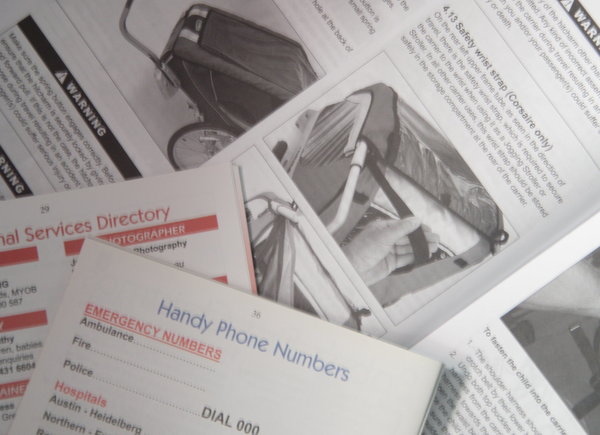
The poor example in my newsletter mixed directory and manual. I go to a directory to get details (such as a phone number of address) and a manual for instructions or procedures. The words are not interchangeable.Getting words right is important to communicating your business message. This is the basis of my Monday Meanings – to help people understand words (although it would never occur to me to define manual and directory to avoid them being confused!)
Your reaction
So how do you react when someone confuses a message through poor word usage?
Are you willing to spend time trying to figure out what a confusing message actually means, or do you give up and go elsewhere?
Once you set up your website and start reading about getting visitors (traffic) to your site, you are bound to hear about keywords (and key phrases but keywords is often used to mean both).
Here are a few points to help you understand keywords, their importance and how you can use them in your website content (and other online communications).
keywords are simply words that summarise your message – don’t get caught up that they are magical or fancier than that. If you are a plumber, your keywords could be plumber, pipes, gas fitting and domestic, but would exclude business, builder and accounts.
when you enter words into a search engine to find something, you are effectively using keywords. The web pages ranking highest for those keywords are what you will see in the search engine results
behind each web page is some information known as meta data. This is part of how websites and search engines work, so is another aspect of using keywords as you can add a string of keywords in your meta data.
don’t use too many keywords as it gets hard to read and search engines may assess it as an attempt to trick them. Always write for humans so it is interesting and relevant, rather than writing nonsense just to get keywords on a page
each page on your site has a different purpose and will have different content so don’t expect each one to have exactly the same combination of keywords. In fact, search engines apparently give better ranks to sites with varied keywords across the site.
specific words (e.g. dresses compared to clothes) are easier to rank well for but they are likely to have fewer searches so you need to balance which keywords are most useful to you. Of course, less effective words can still be used but just less often than your main keywords.
use keywords in your online ads and directory listings, social media profiles, etc – not just in your own web pages. When you have the control, get keywords in the text of links to your site, too.
within the boundaries of writing for humans, remember that keywords earlier in a piece of writing and highlighted in some way will have more impact than keywords late in the piece. (By highlighted I mean placed in a title or heading, in bold font or in italics)
If you used a good web designer in creating your site, they have probably added some keywords into your meta data, headers, image descriptions and so on. Likewise, if your content was professionally written, edited or reviewed, there are likely to be some well placed keywords on your site already.
However, it is an ongoing task to keep your keywords working effectively so worth understanding even if someone else manages it for you.
Maybe you don’t think writing is a key skill in business presentation, or that putting any old word on paper is good enough to make your point. Obviously I think good writing and clear communications are important but I just read an article listing some examples of when writing is more important than speaking for a business.
Even if you use someone else to write ad copy, website content, articles, blog posts and other obvious writing tasks, the following list shows that business writing is a necessary skill for any business owner or manager:
making a visual impact – spoken words alone aren’t always enough, even in a training session when visual aids and handouts are valuable. Seeing things in print makes them more believable and easier to remember, so writing can have a bigger impact
setting rules and guidelines, such as policies and procedures. Imagine having verbal policies in a large company – it would be easy for people to forget or misunderstand what they’re told, and some people would simply choose to do things their own way. Writing out procedures ensures consistency and forms a record of your expectations
making complaints have more power in writing – they are taken more seriously, are more likely to be followed up on and form a record for any future interactions. Further, it ensures your actual complaint is received as the person you complain to may not be the one who can act on it so a verbal message could be changed
responding to complaints is also good in writing – it shows you genuinely care about the customer’s experience with your business and gives you the opportunity to show what you have done to prevent the issue happening again
giving feedback and recognition has more impact if you take the time to write it down, and your written message may be kept for a long time. Whats more, if you make the written message public (including just on the business noticeboard or intranet), your compliments carry so much more weight and make people feel truly valued
complex ideas are not easy to grasp so a written explanation gives people the chance to reread it for understanding and have it as a reference later
written communications form a record of what was ‘said’ and needed. This has two advantages – it helps you remember details and complete a task correctly and it also helps protect from ‘he said she said’ situations
writing an agenda for meetings can save a lot of time and frustration as the agenda keeps everyone on track and they can prepare ahead of time. Likewise, minutes of meetings form a record and reminder of tasks to be done
involving new people becomes much easier if information is in writing – for example, if you change project managers part way through, the new manager will know what has been done and what to chase if they get written notes to follow
Again, some of these tasks can be handed to a business writer, but others you need to do yourself (in which case, hopefully my blog is one resource for helping you write effectively!)
Do you have other examples of when being able to write is critical in business?
Do you remember writing essays at school where you had to make up content to fill the required word count? Do you prefer to read a long book over a short one?
In business and website writing, the clichés ‘short and sweet’ and ‘less is best’ are better options than writing a lot for the sake of writing.
Why keep text short?
Long documents intimidate
people are busy and want to get the information fast
it tends to be clearer and simpler
it looks less intimidating so more inviting to read
it is easier and quicker to proof read!
Keeping it short means short words, short sentences, short paragraphs and short result.
So ‘about’ instead of ‘in respect of’; ‘Accountants advise businesses’ rather than ‘business get advice and recommendations from people experienced with accounting’; and ‘stocktake sale’ rather than ‘reduced prices at the end of season to reduce our stock levels’.
Of course, short in the extreme is not the answer either. I use the idea of ‘if it can be done with fewer words, then do it’ rather than making everything short.
When keeping text short, remember
it must make sense
all critical information must be included
keep it easy to read and suited to your audience (for example, ‘because’ is actually longer than ‘due to’ but is used more commonly in speech so is often the better choice)
Have you ever noticed how changing one word can totally change a document or someone’s understanding?
I don’t mean where the wrong word is used accidentally (for example, a typing error changing boy to buoy) but where an appropriate word doesn’t work as well as intended.
Sometimes the word doesn’t work because of the audience. For example, I have seen Australian children (and adults actually!) struggle over American books when they write about pacifiers (dummies) and diapers (nappies) – that’s life if the author was aiming at American children, but bad judgement if the author was aiming at Australians.
Often, however, a word is used that has hidden meanings that can detract from what you were actually aiming at.
I recently had a discussion about the word therapist versus counsellor. While both words can describe a person you talk to about issues and (hopefully) get some insights and direction from the sessions. However, people perceive the two words in different ways – do you? Personally, a therapist implies someone who will help fix a problem (compare to a speech therapist or physiotherapist) but a counsellor is more about working through ideas or situations. So which word is best will depend on what message you are trying to give.
Another example is calling goals or targets ‘milestones’ instead of goals. Michelle of Shel Design was struggling with the concept of setting goals – to her, the word goal implied a final step whereas setting milestones was easier as they were just part of her business process and development. In this case, the word goals was appropriate but had certain hidden meanings for people like Michelle – when writing, those hidden meanings are important to consider, too.
When reviewing your writing, consider your use of words – are some of those words going to mislead some of your readers? Are there hidden meanings you haven’t considered?






Recent Comments