I hope you find my writing and business tips and observations useful. My business and blog are dedicated to helping businesses communicate clearly and reach their potential.
Read, and enjoy!Tash
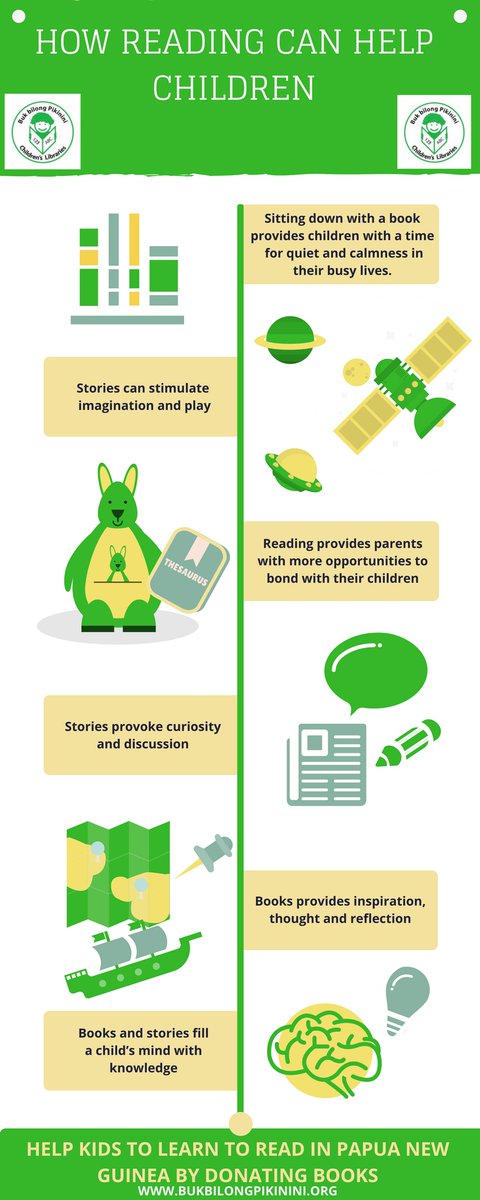
I came across this great infographic outlining why children need to be able to read.
As well as being a good message in itself, the infographic also supports Buk Bilong Piknini (a charitable organisation funding books and reading programs for children in Papua New Guinea).
What do you think – why is it important we encourage children to learn to read, and then read some more?
I would also encourage everyone to help ensure our children are literate – whether by donating to groups such as Buk Bilong Pikinini, helping at schools or giving books as gifts, every bit helps.
Helping children learn to read
I frequently help at my children’s school by listening to children (usually not my own!) read and helping them build the skills of sounding out new words, ensuring the words make sense and getting a full understanding of what they are reading.
Why do I (and many others) help these children?
learning to read opens many opportunities for children – through learning, ideas and comprehension
the sooner they learn to read, the easier other aspects of school become – delayed reading can limit other learning and become a downward spiral for education
I love reading – books give me pleasure, ideas, an escape and relaxation – and I hope to share that pleasure with children
all the children benefit by their classmates being able to read – teachers can concentrate on contact rather than reading if all students can read competently (for their age) and each child can contribute more ideas and experiences if they are well read
seeing me place an importance of everyone being able to read, encourages all the children to value reading
seeing people volunteer to help at school also teaches children about community spirit, generosity and being able to make positive change in small ways
What have you done to help children (or adults for that matter) learn to read and enjoy reading?
“It’s not fun to reread everything but you have to edit your work. I’ve written long essays at Uni, thinking they were good, but when I edited them, I found some bits just didn’t make sense. Sometimes your brain takes a little rest and you don’t write as well.”
That’s what my son’s grade two teacher said this morning as she led a class on editing.
learning to edit
The ability to edit what we write is an important communication skill. For instance, if I wrote an invitation for Thursday 10pm, I may be a bit lonely at 10am when no one turn up because I hadn’t checked what I wrote in the invitation.
While it can be much easier to edit someone else’s work as it is fresh to us and we don’t have an expectation or memory of what was to be written, there are many times when doing your own editing is necessary.
Technically, learning to read and write gives us the skills to edit our work (for example, you could recognise ‘siad’ was incorrectly spelt).
However, as I saw in the classroom today, being given direct tasks for editing is an effective way to understand and undertake editing.
basic steps of editing
Each student was given a checklist of tasks to edit a piece of work they wrote last week.
The group I worked with, went through the list item by item to improve their writing. When I edit, I probably do multiple steps at once but doing one at a time is simpler for children. I also think that doing it step by step actually makes errors easier to spot.
Why not follow this list next time you have to edit something?
understanding the checklist
Just because this list uses very specific terms taught at our school (and others!), here are a few tips…
not everything needs a title, but most writing that you would edit does (including an email subject as a title)
make the beginning interesting! Primary students are taught to make a sizzling start on a simple level, but your writing should also start with something interesting
backfill just means an introduction or explanation of the writing. Consider this the all important sentence that answers who, what, where, why and when.
different styles of writing require differences in content, so you may not always need events to be listed in chronological order – but the order of what you do include needs to make sense in the relevant context.
at school today, I had the students check each sentence made sense. Some had written ‘first tunnel ball. then octopus.’ which obviously needed to be more like ‘first we played tunnel ball, then played octopus.’
As more literate adults, we can read through the work faster to check for meaning. However, a slow read of each paragraph can really help spot errors.
getting help
I liked that the teacher today actually told the students to get help with editing.
First, she suggested that if they suspected (or knew!) a word was misspelt they could check the spelling by using their dictionary or asking a classmate.
Then, she also suggested that for any sentence they were unsure of, it was ok to say “Hey, Tom, does this make sense to you?” and get someone else’s opinion.
So even if you don’t get someone to edit your writing for you, you can look up or ask for help on specific sections of your work. If the writing is of importance, the editing help is really worth the effort.
Conferences notes can lead in many directions, every one can be important and strong. You just need to find the right notes for you.
There are great quotes around. Some of them can be very inspiring or lead you to new ideas that can change your life.
I think we all come across great sayings, lyrics, words that make us think. Yet it is so easy to forget them in the everyday or hear so many at once that the wisdom doesn’t have the opportunity to really sink in.
The best businesses and blogs solve a problem in the world. ProbloggerEvent
I am trying to write down those that really stand out to me – which is sometimes a challenge to keep up with the feed speed and write. But it is obvious that getting information solely through the twitterverse is limited in two ways.
For one thing, it is going past so fast that I can assess something is important and/or useful but not really process it.
The other is that there is no background context. This means I may be missing part of the point, of course but also that there is less opportunity to absorb the bigger picture and get my own ideas sparked by little things said.
Don’t get me wrong – I’m loving the technology that allows us to share in the event despite not being there! Twitter is live and awesome, virtual recordings later, it’s all good!
And I often shares tidbits of information when I attend a conference, webinar or whatever, too as it helps me cement ideas and I like to share. And I figure tidbits are better than nothing.
Making use of those tidbits or information and wisdom
So how can we maximise these bits of stuff we’re getting via tweets or quote websites and the like?
Please share your ideas and how you learn from others in the comments below – I want to learn rather than get overwhelmed or miss the very points I notice!
So some ideas from me to get us started…
focus on one medium at a time – trying to keep track on twitter and Facebook while listening to recordings will send you mad I think! I’m watching twitter now and recordings later.
write down some of the points that really stand out for you – you just can’t write them all down!
if following on Twitter, retweet some of the good ones. It helps share the love obviously but also gives you a reference point to go back to for information later
if people share links, open them but leave them until later for reading – blog posts and the like will wait 🙂
I know tweets are short, but feel free to shorten them if it helps! As long as it still makes sense to you, skip words and abbreviate other words
Join some conversations where you can – it can add depth to things. Obviously not easy on a busy twitter feed but it is interesting and works along the usual social media premises.
Have you ever followed a live feed for an event?
How did it go? Did you learn enough to make it a worthwhile experience?
I just read a post from Mummy Smiles that is basically a letter to a teacher she appreciates for the impact he made on her life. It’s a lovely idea to reflect and thank those who made a difference as part of World Teachers Day 2012 (which I have since discovered was on 5 October, but that doesn’t change the sentiments of my post!).
It got me thinking about some of my great teachers – and I’m sticking to the formal definition of teacher for now as distinct from other people who have taught me things along the way.
Inspiring biology teacher
First to mind is my year 12 biology teacher, Mrs Bennett. I loved how she knew her stuff well enough to not need notes – she just stood at the front and spoke to us about whatever topic we were studying. It really stood out to me that she did that, and could answer random questions thrown at her, whereas most other teachers worked more closely to their class plan.
The fact she just spoke and I could take notes in my own style (rather than copy whan was written on the board) was something I enjoyed and value.
I like freedom so choosing what to note suited my style
It was great training for uni the next year – and subsequent seminars and conferences I’ve been for that matter. She gave us a real life skill.
I learn more by having to figure out what’s important enough to jot down when listening to new information – scribing someone else’s words doesn’t have the same impact. So her style probably helped me get a great final score for biology (don’t ask what I got because I can’t remember! It was certainly above 85% anyway)
As many students didn’t grab the opportunity as I did, Mrs Bennett finished each discussion with a set of notes on the board for people to write down. I spent that time, thinking about what she wrote or helping my less-science-minded friend understand the lesson – again, I love the fact she respected me to do that as she knew I had already taken notes and absorbed the topic.
Ahead of his time
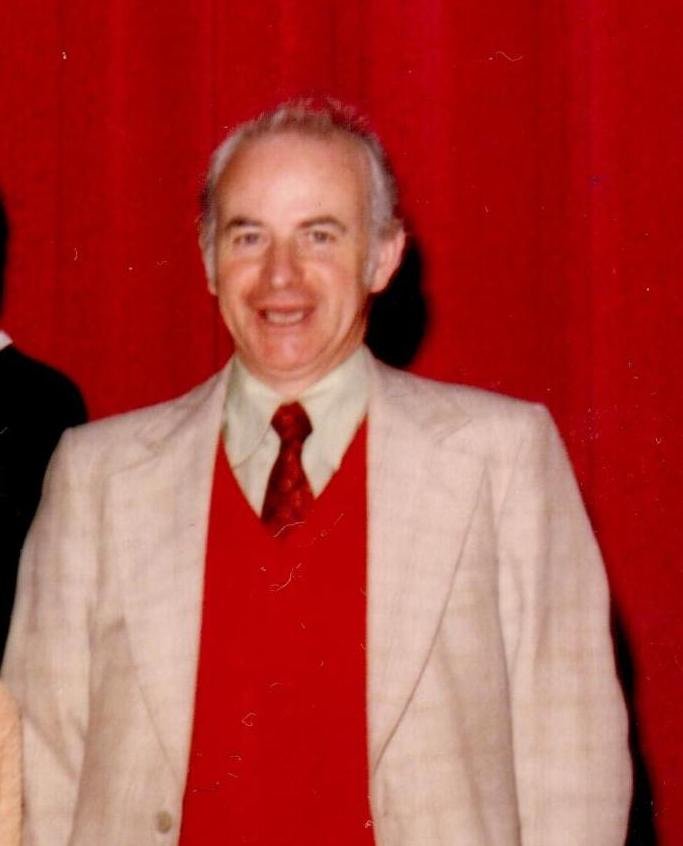
School photo of Mr Hughes
My other favourite teacher was Mr Hughes (a coincidence of names that I loved at the time!) who taught me in grade 5.
Again, I think it was the respect he gave us and the ability to learn at our own pace that inspires me about this teacher.
He was probably the eldest teacher I had (and that’s not just a 10 year old’s version of old! He was definitely older than my parents and from looking at photos I would say he was in his late fifties when he taught me.) Yet he used so many techniques that I now see teachers using with my children.
For example, in maths, he used worksheets that he had prepared. He assigned us individually to a level in each maths topic (eg divisions, multiplication, measurement) and that’s the worksheet we started on. During class, we each worked at our own pace to complete the relevant sheet – if we finished, we simply moved onto the next level. Mr Hughes walked around helping as required and checking our work.
That means of teaching was unheard of in our school and from any of my friends.
Yet it gave us all a chance to learn – the smart kids were challenged, the struggling kids were supported and no one was judged or felt inadequate (or superior for that matter).
Mr Hughes also gave me my first school report – he taught us how to create our own total marks by compiling our test and project results. It was fascinating to see the impact of each result on the total and made the transition to formal reports in secondary school much easier.
My eldest daughter got her first school report as a prep student; her younger sister got a report in kinder! That is 7 and 8 years respectively earlier than I got my first formal school report!
My children are often put into groups at school to work at different academic levels.
Mr Hughes taught me a lot and was definitely ahead of his time with his methods. He benefitted me and I wonder how much he influenced some of the following educational changes?
No English teachers?
It would be nice to say I am a writer now because of my English teachers.
But I’d be lying.
That’s not to say my English teachers were poor teachers, not at all, but none of them were as inspiring as Mrs Bennett and Mr Hughes. And no one ever encouraged me to think of my writing as a skill while I was at school.
I got good marks in English and found writing essays and the like easier than many of my class mates, which all makes sense now! But English was just seen as a means to an end, not as something to follow for its own sake, in my school experiences. It’s a pity really, but I gained other skills and knowledge in doing a science degree instead.
With gratitude…
I say thank you to all my teachers for what they have taught me and their efforts (I know teachers do more than sit in a classroom all day). Even the teachers I resent (and that’s a different story altogether) taught me things.
For Mrs Bennett, Mr Hughes and the other teachers who gave me great moments of insight and development, I am truly grateful.
What teachers are you grateful for?
Do you value your life teachers differently to your formal education teachers?
Day one is just about over for Problogger 2012 – the formal sessions have finished and we just have a networking even to go before we head for bed (and we’re all going to need a sleep I think!)
For the attendees
Based on conversations I have had, tweets I have read and my own assessment, the event has been fantastic and provided a lot of information and inspiration for a lot of people.
And given the amount of tweets flying around, I think it is inspiring and informing people who aren’t even here!
And it isn’t just about the learning. The speakers have been great, don’t get me wrong, but there is more to a great conference.
You meet people and learn from their stories and experiences.
You feel part of something – and in this case feeling part of a blogging community that can make a difference is empowering.
Listening to other people and other people’s questions can give you a new perspective, too.
Personally, I have a lot of ideas for myself and to share with others from today. I’m excited about implementing them from Monday onwards.
For the organisers
Aside from any financial gain they get, what does a great event do for the organisers?
There must be a lot of satisfaction from helping so many people and having the day flow so nicely.
Obviously, they build their reputation as an authority with credibility.
For the problogger team, I think they also can finish today knowing they have made a difference and are leading us to make a difference, too – and I think that’s something they would be proud of.
So what have we learned today?
The focus has been on monetisation and building communities.
Over the coming weeks I will share ideas and lessons I have learned, and aim to do a summary post early in the week.
For the mean time, the best ways to gain from our experiences today are to search #PBEvent and #PBEvent2 on twitter – hard not to as they were trending terms today apparently!
And grab a virtual ticket to hear the recordings and see the slide shows – you won’t regret the purchase.
And now I am off for a walk to clear my head before the networking.
Theory has its place, but an example often makes learning something much easier. In many areas, an example of a mistake or poor quality is an even more effective teacher than examples of the correct technique.
Or I can give an example: Leave as long as possible before proof reading your writing.
Or I can show you a bad example: Another effective way to increase the possibility of increasing your link building purposes… Then explain the issues with it and write it well: Another effective way of potentially increasing your incoming links…
Does it work for you?
Do you like seeing poor examples of something as a means of learning to avoid those same mistakes yourself?
The bad examples I use are real but I never identify who wrote them – if you searched hard enough you might figure it out, but I respect that the writers didn’t mean to provide us with bad examples and use discretion 🙂
I think it is an effective way of showing how to write well – but do you find it useful? Would you like to see more bad examples I spot to help you improve your writing?
Whether you write a lot and just like learning more or you feel your writing needs a lot of work, you can do many things to improve it. I was reminded of this recently by reading a blog post about the impact of Twitter on a writer.
Here are some quick ideas you may be able to use:
if your writing is too long winded, use Mallory’s trick of thinking of each sentence as a tweet – with 140 characters it is hard to waffle on!
read as broadly as possible – you are learning about writing every time you read something so reading different styles will teach you more
think about what you read – not all the time, but occasionally put some conscious thought into the words used to send a message
practice – there is nothing better at making you a better writer than to write, so write!
study writing – maybe learn to spell a new word each week, read some tips on good writing, follow some blogs about writing (well done – reading this means you’ve already started!) or grab a grammar text book
offer to edit and read over someone else’s work, too – teaching is always a great way to cement things in your own brain, and you may be amazed at what you can learn from others’ mistakes. What’s more, being able to see how others can improve their writing will probably build your confidence
find someone to give you some honest feedback (on specific pieces or overall) and maybe some tips on areas you need to improve – I’ve done this with a few people and it does help them hone their skills
Writing’s main importance is in being able to communicate, to express yourself (or your business) to others effectively. You don’t have to be the world’s best writer but you can choose to improve and not be the world’s worst writer!
Their media release states “Swift and accountable communications: Respondents said they need to hear information 3-5 times before they believe it. Companies should inform conversations among the new influencers on blogs, in forums, and bulletin boards. Australians under 34 are twice as likely to share both positive and negative information about a company online as their older counterparts – this trend will only grow. ”
The repetition of a clear message is important in getting people to trust you (your business) and accept that message. For example, any good presenter/teacher will summarise key points at the end of a topic as that helps others absorb that information.
When planning some marketing, remembering that people like to hear a message 3 – 5 times (and many have long said 7 times) before buying it means:
you may not get great results from your first attempt at marketing
consider how you can present your message in multiple ways rather than spending your budget on one ad
use images and layout to enhance your message – a stronger message may need less repetition than a hidden or weak message
every interaction you have with people in your demographic (and beyond) can reinforce or damage that message so make sure all ads, blogs, your website, your business card and so on are consistent, professional and appropriate for the purpose
Prompt communication is important in this information age – discussing an event well afterwards must be managed carefully so it doesn’t appear you are out of date. For instance, I could write that people affected by the February 7 bushfires are rebuilding and still need support all year but just writing ‘donate to the bushfires’ now looks very old.
The camp was a lot of fun – we were busy with activities all day and entertainment at night, lots of fun and walking around in the bush (well, the bush with lots of people and tents anyway!) We arrived on the Monday and came home (late) on the Friday.
We had some extra excitement with massive storms on the Wednesday – the worst to hit Victoria I heard, with winds hitting 130kms an hour! We were in the area of Victoria worst hit so we certainly were aware of the storm, lol. We spent nearly 8 hours in a strong marquee (rated to 90 km winds) with over 700 cubs and leaders, plus support staff – the kids coped with it really well which made the experience manageable. As leaders, we were really proud of how the cubs behaved well and accepted the limitations forced upon us – they lived up to their honour and promise of doing their best. In our pack, we had one tent damaged beyond use and two tents we considered at risk from a branch so we sent 12 of our cubs (plus some leaders) to sleep in the marquee although the rest of use slept in our usual campsite.
The entertainment consisted of a group of four wanderers looking for the 2010 Australian Jamboree – finding the 1908 jamboree, Rio’s carnivale and cuboree instead! Many of the cuboree cubs are now looking forward to attending jamboree.
I enjoyed being with the cubs – most of whom I didn’t know beforehand, plus three from my home pack – and we had a great bunch of leaders in our pack, too. Will I go again? I’d definitely consider it! Seriously, if the circumstances were right for me personally, then yes I would go again – but would ensure I had some extra time off to recover afterwards!
Would I send my own kids to the next cuboree (age limits allowing of course!), most definitely – I think it is a great experience for them.
Have you ever been to something like cuboree? Is it something you look back on fondly?
And I even learned a few things that may just come in handy as a writer and business owner 🙂 Watch for upcoming blog posts!




Recent Comments