blogging
Information, tips and guidelines for making your blog effective and worth reading

Like most bloggers, I get spam comments – boring and annoying but that’s the way it is. Luckily, I have plugins so don’t often see all the spam that comes in.
Occasionally I do glance through what has been filtered as spam to check things are on track. Recently, a found a number of comments in the spam filter that were a bit different.

Leaving comments in a blog can of course be one way to share your message, and attract traffic back to your site to really explain what is important to you.
But this is the first time I have seen someone set up bulk comments (and I assume it was automated so probably has been sent to many blogs) in order to make their point of view heard.
This isn’t a commercial message, either (although their site could be monetised of course) so it really stood out to me.
Imagine if do-it-in-a-dress, World Vision, Kiva, Greenpeace or any other charity or community group used this tactic – see why I thought this was unusual?
The comments I noticed were criticisms of a writing site
The commenter’s name was even entered as derogative terms against that service so they were definitely keen to ruin the company’s name.
I didn’t click on the link provided as I have no desire to read a diatribe against another service, plus I don’t trust links in spammy comments!
Personally, I have not looked at the named site but I have heard of it. I know some people have found it useful for finding writing projects while the details I have heard concern me and others (the pay rate is apparently ridiculously low so clients can’t assume they are getting quality results and it is not respecting the writers’ time and effort).
I don’t like what I know about that service and similar ones but I have never heard they are dishonest about the pay rates so each to their own.
I agree that the uninformed may be influenced by such sites to work for well under reasonable pay rates because they don’t know any different. It is fair to let new writer’s understand the industry.
It isn’t right to spam the internet with claims of scam and fraud about another company.
So what’s the middle ground?
How can you share a warning with people without crossing legal boundaries and without damaging your own reputation?
This Friday and Saturday, about 300 bloggers will descend upon Melbourne to learn more about blogging at PBEvent with Problogger Darren Rowse.
And I’m pleased to say I will be one of them.

Learning the basics of blogging – and more
I can’t speak for everyone, but I know I am going because
Really, it’s just like going to any conference – the topic just happens to be blogging.
And PBEvent happens to be hosted by one of the best known bloggers in Australia. And is offering some great speakers and topics (you can see the schedule here if you’re interested).
When I go to any business event, one of my aims is to learn.
I think being open to new ideas and expecting to learn is a good starting point. Sometimes the best value from an event is the ideas it sparks so you need to be open to listening and learning.
Taking notes is one way I cement the information I hear. Traditionally that has meant writing notes in a notepad but obviously people have more options these days – I’m still inclined to write notes by hand as it works better at getting information into my mind.
To be honest, I often don’t read those notes again, and certainly not often. However, just the act of writing notes helps me retain the information better.
I also find that tweeting snippets of information is a great learning tool. By deciding something is valuable enough to share and putting into few words (I try for less than the allowed 140 characters) makes that point stronger for me. And hopefully it is providing value to my followers as well.
Tweeting information during a webinar is easy. I haven’t yet tried it at a live event but may give it a go during PBEvent.
If nothing else, I can reread my tweets afterwards as a reminder of some key information.
There are distinct advantages to live and recorded information sessions, I think.
Going to a live event obviously has the advantages of a new environment and networking with other people. It also means you can potentially interact with the speaker(s), ask questions and participate in the atmosphere. Sometimes you get additional opportunities, too, such as handouts, ‘conference only’ discounts and yummy food!
Listening to a recording of an event gives you more flexibility – you can hear it at whatever time suits you – and saves travelling time and expense. For information packed sessions, a recording also means you can pause and rewind the recording to catch important bits and make sure you understand things. For a poor sessions, it is also very easy to turn it off and get on with other things!
Which do you prefer? Have you tried both options?
I attend more webinars because of the convenience, but I like to attend some live events every year as well to interact with people.
With the Problogger event, I get both as all sessions are being recorded so I can listen to them after the weekend. Which means I can relisten to important bits I missed but more importantly, I can hear the sessions I don’t attend (part of the weekend has two sessions running at the same time). And slide presentations will be included with the recordings, too.
The recordings are also available for non-attendees via a virtual ticket (which are being sold at a 25% discount until mid afternoon today Melbourne time I believe). You can grab a virtual ticket and get access to over 21 hours of blogging information plus a live Q and A sessions with Problogger next week (it is an affiliate link but I honestly think it is good value – and much cheaper than what I’ve paid to attend!)
And if you are going to Problogger event, or a similar event, you may enjoy the following preparation posts, too:
Blogging conferences and training events
10 things to do to prepare for PB Event
Hot tips for Problogger ‘virgins’
Have you ever attended a blogging event? What did you get from it? And what tips have you got to share for those going to their first blogging conference?
 Updated September 2013: The 2013 Problogger conference is on again this month and you can choose to attend in person in Queensland (if you got a ticket fast enough!) or virtually (2013 recordings will available a short time after each sessions is run so you can listen on the conference weekend.) plus watching interactions on Twitter during sessions.
Last week in a twitter chat, I gave the tip of linking to relevant posts at the host blog within your guest blog posts.
 The question, of course, is why that is important.
What do you think – have you ever noticed links to the host blog within a guest post? Did they add value to you and the blog?
 Whether or not you want them, as your blog gets older and more popular it is extremely likely that you will be offered guest posts for your blog.
And assuming you want to maintain a certain standard (in writing quality, content value and staying to a style and topic range), you will need to reject some, if not all, of those offers.
I’m not going to cover why we should reject posts nicely – or reject them at all rather than just ignoring them – that’s a topic for another day. And I’m ignoring obvious spam for this post, too.
The key to refusing a guest post nicely is to be polite and respectful.
Even if the guest post is irrelevant to you or low quality, someone has taken the time to write a post and submit it to you. If they have really tried, they will have an emotional attachment to the post and your response.
The rejection note doesn’t have to be long as long as it is respectful and makes sense – a greeting, one or two sentences and an ending is enough.
Hi Sam,
Thanks for submitting your “how to treat frog fungal infections” post. It was well written, however, my blog only accepts posts on business related topics.
Kind regards,
Tash
Hi Mary,
I received your guest post yesterday, thanks. I won’t be using your post in my blog because it doesn’t meet the guidelines for guest posts.
Cheers,
Tash
Thanks Phoebe.
Your guest post, Measuring your social media ROI, was fascinating and well suited to my blog. However, I found it a little hard to understand at points and a couple of sentences seem to stop mid-idea. The questions you posed were thought-provoking so I would be interested in seeing a revised version.
Hope to hear from you soon,
Tash
Hi Bob,
While I appreciate you sending me a guest post I don’t think it suits my audience so I have removed it from my inbox.
Regards,
Tash
* image courtesy of 123rf
Whether it is a direct email, marketing campaign or even a cold call on the phone, it’s really important to make the offer relevant to the other person – if you want results anyway!
If you want to do some guest blogging and have found some potential host blogs, your next step is to contact the blog owner and offer your posts.
Today, I received a pleasant email offering me some guest blog posts. She wrote clearly, openly told me which site her bio would link to, provided samples of previous posts and offered to write on a topic I suggested.
Sounds good, right?
Yes, up to the point of looking at her URL and sample post topics.
She is representing a housing construction company (the name Word Constructions does mislead at times!) so was offering posts about building topics which is obviously completely irrelevant to my blog.

Letters are Word Constructions’ building blocks
It all comes back to knowing your audience and your purpose.
If I know my audience are people running a business, then they are not coming to me for building tips but could be interested to read a business book review.
If the purpose of my blog is to share writing and communications information, there is little point writing about the best time to prune a lemon tree.
A little bit of research on the part of the would-be guest blogger would get her posts into more blogs – you don’t have to read much of my site to learn I am a writer, not a builder, and that my name is Tash. I (and therefore my readers) are not her audience so her posts are not relevant and she wasted her time emailing me.
So for every piece of business communications, know your purpose and audience so you can make the message relevant.
Have you considered the relevancy of your blog posts to the people reading them? Are they at least relevant to the audience you want to attract?
Whether it’s new or established, if you have a blog to help promote your business, you probably want it to be effective, right?
An effective business blog doesn’t necessarily mean it sells anything directly – in fact, trying to sell in every post is likely to turn people away and be highly ineffective.
Like so many things, there is no single answer. It varies between businesses.
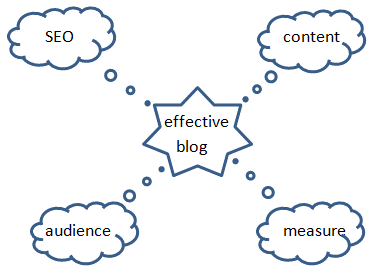
Some tools for building an effective blog
However, I think the following options cover most (if not all) objectives of business owners when they establish a blog:
Of course your specific definition may include more than one of these options in more or less detail.
To know if your blog is effective, you need to know the purpose of your blog and have some sort of measurement in place to gauge how well you are meeting that purpose.
For example, if your blog is aimed at getting more website traffic, posting once a month won’t be effective but you can measure your success by comparing website stats each month. Testing posting three times a week then five times a week will show you what is more effective at gathering more traffic and subscribers.
I have just read Chris Horton’s post on steps to generate leads online with your business blog. In fact, that’s what inspired this post!
Chris goes through three steps which go towards the purpose of your business, marketing and blog – namely know your (target) audience well, address your audience’s needs and how to offer your audience value.
His last step is about clear communication – make your blog posts simple, concise and relevant. Heard that before? Well, yes, that is where my blogging tips usually come in 🙂
I think it is important to note Chris gives three tips on developing a purpose and strategy for your blog THEN a tip on how to make each post more effective.
So have you defined what effective means for your blog?
Do you know who your target reader is?
How often do you measure your blog against your effectiveness definition?
Maybe your blog is not as effective as you’d like.
Yet you want it effective tomorrow, not in the six months it may take you to work through everything Chris suggested. And, if you’re like many of other bloggers, you don’t want to shock your current readers by massive changes.
I think this is another situation where step by step is the solution.
Start defining your target audience and their needs in more detail (or some detail as the case may be!)
Each time you discover something that is not ideal in your blog, change that.
Maybe you decide your ideal audience are parents of young children but you have a blog category on teenage activities. That category doesn’t help your audience so stop writing posts in there as a simple step in making your blog more effective.
Step by step will take a while but is easier to face and implement than doing it all in one go.
I’m going to go out on a limb now – for you personally, what one thing would you like changed on my blog to better suit your needs? Let me know as a comment below.
No promises I’ll change it but I will consider all feedback in light of my blog objectives.
As I have just started using guest bloggers on this blog (see Karol’s post from yesterday as an example), it seemed timely to discuss how you establish guidelines for your guest bloggers.
Every blog is different – as are all the bloggers – which means two things.
Guidelines for guest bloggers helps maintain your blog. Publicly available policies or guidelines will also reduce the number of blog posts you receive that don’t meet your rules.
Well, the short answer is ‘that’s up to you – it’s your blog!’

Fun or formal, long or short, guidelines are handy…
But I’m guessing you want a more detailed answer so here are some important points to consider – you may or may not list all of them for bloggers to see but it’s good to have considered each one relative to your blog.
Which ones do you include in your guest blogger policy (even if it is an unwritten policy so far!)?
Did anything on that list make you say “Oh, that’s a good idea!” and get you thinking?
I’ll post more about hosting guest blog posts soon, but let me know if you have specific questions…
 Once people decide to add a business blog, they sometimes ask me about hosting the blog.
There are two basic options for having a your blog hosted – hosted by the blog software people or hosting you arrange yourself.
Putting the blog software onto your own domain and web hosting is the better business option in my opinion. Yes, it does cost more but the advantages are worth paying that price.
So what are these valuable advantages?

Keep control and reduce risk to your blog
you have long-term control – if you own the domain and hosting, no one can change the rules. True, blogging platforms haven’t done much of this in the past but the possibility is there
Although I think hosting it yourself is a good move, getting a hosted blog does have some advantages, too:
So that’s my view of your options – do you have any other advantages for either option that I’ve missed?
Next week, I’ll write about the actual choosing between these options – if you have any questions, let me know!
* Photo courtesy of 123rfHeadings (or titles) to blog posts and other online articles are important.
A good heading will entice people to read the post which means they will click on a link to it as well. So write a good heading not just within your blog but in the title you use for links to your blog post.
Including relevant subject words in a heading has two advantages for bringing in more readers.
Anybody looking for information on a specific topic will be attracted by seeing those words in the heading. It will also stop uninterested people clicking through to your post (and this is a good thing if you are trying to reduce your bounce rate and not waste time and bandwidth on people who are not your potential customers anyway).
Including subject words also helps search engines summarise your blog post and determine its importance and relevance for any specific search term.
Here are a few examples to show how a subject word can help:
What I’m reading vs My top business books
Preparing dinner vs Planning nutritious meals
My hobby vs Bike riding for fun
Which of these headings do you think will show up in search engine searches for business books, healthy cooking and bike riding?
I do a bit of guest blogging, and I believe it is a mutually rewarding experience if done well. I certainly don’t think the host blogger is doing it all for the sake of guest bloggers as they also benefit from the arrangement.
Maybe the host blogger likes updating the blog without writing much themselves, maybe they like the traffic guest bloggers can bring or maybe they are basing their blog on a team effort to give a broader picture. Whatever the motivation, the host blogger benefits.
Accept posts graciously
 I think it is plain good manners and a strategic decision to be nice to people who offer posts upon request.
Recently, I saw a blog request blog posts through BloggerLinkUp. I looked at the site and the topics covered, decided it was a good fit for me and emailed the blog with a post idea.
The response received left a sour taste in my mouth and I didn’t bother writing a blog post for him. The issues with the email:
So if you want people to provide guest posts for your blog, or articles for your website or newsletter, try to build a relationship with those who offer you their writing – or at least send them a nice email response.
What sort of responses have you received from sending out or offering to write guest blog posts?
Recent Comments