I hope you find my writing and business tips and observations useful. My business and blog are dedicated to helping businesses communicate clearly and reach their potential.
Read, and enjoy!Tash


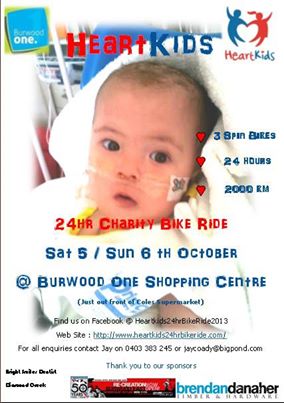
Developing interest is a marketing baby
We had a baby in the house last night, and it was lovely. Lovely to have a baby to hold but also to see how it brought our family together to watch and care for baby Sam.
Sam even came to a school event with us.
We got some interesting looks at the school, too. My daughter even got comments about being a teen Mum as she did most of the carrying at school*.
Some people smiled instinctively when they saw a baby or the baby carrier, others smiled in a bemused way when they realised Sam wasn’t a real baby. Many people were obviously curious and a number actually asked us about Sam.
Why a baby?

Obviously not a real baby, but a close resemblance in many ways
Sam was with us as part of my daughter’s school work – individual students are given 24 hours to care for the baby simulator which cries randomly and needs comforting or feeding.
In this case, it was part of learning about human development although some places run this same program as an anti-teen-pregnancy concept.
The fake baby is about the same size as a newborn, although it felt heavier and bulkier to me – probably because of the electronics in the middle and a lighter head than in a real baby.
Sparks of interest
We walked around a course/career expo and got a lot of interest – a lot more smiles than you would normally expect and exhibitors had a different reason to speak to us.
Goes to show what an ice-breaker a baby can be – it is pretty much the ultimate way to spark interest! Even (or perhaps more so!) a fake baby.
It got me thinking though – what could a SMB person do to spark a similar level of interest at an expo or other business event?
If you have a baby (or a pregnant belly) of your own, the answer is easy!
Carrying a baby simulator to gain attention is a bit weird – actually it would be a lot weird – so I wouldn’t recommend that. I wouldn’t think you’d get one cheaply, either.
So what can you do to generate sparks of interest before you open your mouth and give an elevator speech or mention your USP?
* The school event last night was aimed at younger students and my daughter had Sam because of an accelerated subject, thus it wasn’t common knowledge or a common sight and therefore generated comments and wonder.
Making your business dough creatively
Over the weekend, we were coming home late so dropped in at a country town for dinner on the way.
We chose the pizza and wine club because it looked nice and suitable for a quick family meal.
A thoughtful surprise
When the waitress gave us menus, I was pleased to see a Little Golden Book on top thinking it would be a distraction for my children while we waited for food.
However, the waitress told us the kids’ menu was inside the book’s cover!
It was a creative way to present the kids’ menu and would serve to make kids feel special (their own menu) and entertained. Of course, older children may be less impressed – our elder daughter didn’t seem to mind though.
The kids’ menu had a small selection of pizza choices and so on.
But it was the message at the end that really caught my eye. There were two offers we could ask for – pencils and colouring pages for entertainment or a ball of dough to play with!
My children chose the dough – no surprises there!
They had a lovely time playing with the dough while we waited for our food. Then, their creations were taken away and baked in the pizza oven so we came home with bread lions, cars, horses and a rose (my daughter made me the rose – it is sitting on my desk!)
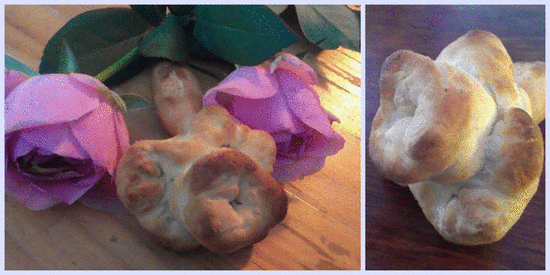
A rose by any other name smells, ah tastes, as sweet…
Making dough
Have you ever experienced something like a restaurant providing dough to play with?
It was such a great idea – it kept the kids quiet so the restaurant was nicer for everyone. Especially the parents who got to relax a bit more.
It was all done with a smile and obviously is done regularly – they had special baking dishes for the purpose.
The cost for the restaurant would be negligible – what’s a bit of dough in a pizza/pasta restaurant?
The reward is great – happy customers and I bet I’m not the only one sharing the story.
My kids have already asked to go back there…
What’s your dough?
Lots of places make pizza. Maybe the other pizza shops in Kyneton make as good or better pizza than the restaurant we went into. But have they attracted a loyal following like this?
Do you ‘offer kids dough’ in your business? What do you do that’s unexpected, creative, simple and appreciated?
It’s the little touches in business that can make a huge difference.
Writing and grammar: Valentines Day is almost here
It is February and we’re almost at Valentines Day. 
Personally, I don’t care about the commercialism of the day. I consider it a reminder to acknowledge those people we care about, both romantically and otherwise, in a way we probably don’t think of throughout the year.
I aim to send a note, letter or email to people close to me for Valentines Day, just so they know I care all year, even when I forget to tell them.
For those romantically inclined, I wrote an article on writing love letters, and another on how to present love letters in a special way. I also wrote a number of Valentines articles for Save Time Online, including Valentines ideas for singles!
Writing Valentines Day
And for those interested, Valentines Day, Valentine’s Day and Valentines’ Day are all grammatically correct! It depends which grammar rule you believe is more important as to how you write the word!
Valentines Day – the name of an event, such as Good Friday or Christmas Day
Valentine’s Day – the day owned by or relating to Valentine
Valentines’ Day – the day owned and celebrated by valentines (lovers) everywhere
The same answer applies to Mothers and Fathers Day, too.
So what is your preference for writing Valentines Day? Is that just what feels right or have you thought about what is ‘correct’?

A funky gift is nice without sending inappropriate romantic messages!
Wishing you and your family a Merry Christmas
Merry Christmas!
I hope you, your family and friends have a lovely day today (whether you celebrate Christmas or not).
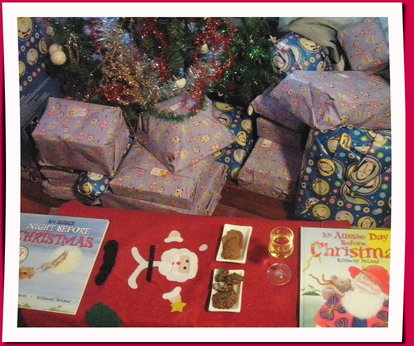
A snack left for Santa last night…
I would also like to wish you a happy and successful 2013.
Please note that I will be working reduced hours from now until the 3rd of January so please be patient if I don’t reply to emails or phone messages instantly!
Bloggers together have power
Today is Blog Action Day 2012 (BAD12). That means over the next 24 or so hours many bloggers will be publishing a post about the power of we, showing that diverse people can come together to make a difference.
For me, the timing makes this post easy – I just spent most of the weekend with 3oo fantastic people at the problogger event so have a better sense of the power of we within blogging.
The power of we at a conference?
At one level, we were just a group of people sitting in the same room listening the same speakers.
But it was way more than that.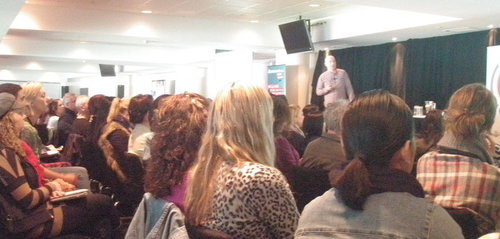
People were talking, mingling and supporting each other – not just for those 48 hours but building relationships that can move us forward in the days and months to come. The organisers and speakers not only encouraged us to mingle (one speaker, I think it was James Tuckerman of Anthill, told anyone sitting next to a person they came to pbevent with to sit somewhere else in the next session) but had made it easy to do so with generous breaks between sessions and a cocktail party on Friday night.
Amongst many other topics, we discussed payment for our work, such as being paid by a brand to promote them within our blogs. While there was an understanding that someone with more traffic and influence can probably charge more than a new blogger, there was a consensus that bloggers should bot accept free or very cheap ‘work’.
The point was that we all deserve to have our time recognised and paid for. And by accepting lower rates we can cheapen the work and efforts of other bloggers as well.
It’s also one reason I hate those content mills where people can buy webcopy, blog posts, articles, etc for a fraction of the price professionals like me charge – it makes it harder for us to earn decent pay rates for our time and expertise if clients think they can get it done much cheaper (especially those clients who don’t understand how to judge quality writing).
Working together and setting some industry standards helps all bloggers and writers.
Discussing those standards at PB Event gave us not only a framework but the confidence to stick to it for a reason beyond ourselves.
The power of we at work.
What we can achieve
Leading up the PB Event, problogger (Darren Rowse) himself set a challenge.

Problogger in a dress, PB Event 2012
If we could fundraise $240, he would attend the final session on Friday in a school dress. A few more targets were added when the $240 was reached in one donation, with the final level being $2,400.
It was fun, but the point was to raise money to help girls in Sierra Leone go to school – $240 sends one girl to school for a year.
I was sick to the stomach to find out a girl is more likely to be sexually assaulted than go to school in Sierra Leone.
Think about what that means. It’s awful.
I’m pleased to be part of PB event where we raised enough to send 10 girls to school.
It isn’t enough, but it is a start and shows we care. Sending 10 girls to school will make a difference to them, their families and presumably their communities.
Darren challenged us to all do the same, to see how much money 300 bloggers’ communities could raise, how many more girls go to school.
Given it is blog action day, I wonder what would happen if all bloggers around the world tried raising some money by doing it in a dress – could we get every girl in Sierra Leone to school?
Could we make it so school is more likely than assault for a nation of girls?
The power of we is strong. Let’s use it for good.

Writing is a skill

Lady Gaga – more skilled at singing than most
Singing is just saying words in time to music, really. I even get requests to sing most days – Twinkle Twinkle and once I caught a fish alive are some of the most frequent requests. So it’s probably time I recorded my first album and gave Lady Gaga a run for her money isn’t it?
I know how to run, too – it’s like walking only you pump your arms and go faster. So I think I will join the Australian Olympic team, but can’t be bothered training much before London.
Do those ideas sound a little silly?
Assessing your own skill sets
Obviously there are many things I can do (cook, draw, throw a ball, hammer a nail, first aid and dance just to name a few) but most of those things I can’t do well enough to call myself an expert or expect money or fame for.
So why do so many people think that because they know how to form letters with a pen or type, they know how to write to a commercial standard?
Acknowledging that writing is a skill
I have come across a lot of examples lately where people think they will start an online writing career for easy cash or because they like the freestyle lifestyle. And others who ‘offer writing expertise’ while demonstrating they can’t spell or write a coherent sentence.
It frustrates me – not because I feel they are any threat to me (my clients want quality and can tell the difference between poor and good writing) but because it cheapens the efforts of quality, skilled writers (like Paul Hassing, Sarah Mitchell, Lorraine Thompson, Desolie Page and Belinda Weaver to name a small sample).
It angers me when these same people put information out there that is wrong or easily misunderstood. If their readers don’t know any better, they could be lead into costly mistakes. Good writers not only write well but, for less known topics, research the material or get expert assistance on the content before posting any content online.
Writing well is a skill – aspects of it can be learnt (such as how to spell correctly and when to use a capital letter) but much of it comes naturally and through experience. Reading and learning contribute to the skills of a writer, so even great writers can improve.
I can write well. I can sing – but only well enough to entertain my toddlers and enjoy myself (Lady Gaga need not fear me as competition!) I know the difference between those skill sets and use them accordingly. Is it so much to ask that other people realistically assess their skills, too?
Building a happy new year
 As it is the first of January, Happy New Year! I hope your year is better than you expect and dream of, and that it is successful in many ways.
As well as wishing you well for the year ahead, I want to share some ideas for starting 2012 in a way that will establish a great business year. No matter what has come before, you can set some good foundations for your business (and life!) now and make your life a bit easier.
1. simplify and streamline
What can you get rid of – maybe there are time wasters you can stop or activities that would be better outsourced, or perhaps you offer a product or service that costs more than it brings in.
What can you simplify? A complex pricing structure may be unnecessary or perhaps there is no real need for some steps in your packing or ordering process.
Now is a great time to review last year and think about simplifying and streamlining your business
2. standardise and record
Having procedures in place saves you money and time, allows you to get more help and writing them often shows up improvements to your method. Consistency is important for many aspects of business, and procedures are the easiest way to ensure things are done consistently (as long as your team uses them anyway!)
Taking time to also standardise document codes and updating, repeated communications (think of those emails and letters you write over and over) and having clear terms and conditions will also save you time throughout the year, and probably give you a better result as well.
3. review your prices
The financial success of your business obviously closely relates to how much profit you make from each sale so pricing is a critical balance between being acceptable to clients and generating enough profit.
When reviewing your prices, take into account new or increased costs (including flood levy, higher Victorian electricity rates and potential carbon tax impacts), competitor prices (don’t just copy them but take note of what others are doing), changes you have made (e.g. if you give greater value or have reduced costs maybe your prices need to reflect that), use of newer technology (including social media expectations and possibly updating your website for mobile access) and reasonable profit margins.
A price review can take time and it may be better introduced later (such as after the carbon tax comes into effect) but a new year is often a good time to assess things and make the necessary decisions.
4. simplify non-essentials, too
Remember to look at the support activities around your business as part of your streamlining. These tasks don’t directly bring in any income so reducing the time you spend on them gives you more time to generate income, and if you outsource them they will usually be cheaper services than things like design or IT work.
Hire a cleaner once a fortnight, get a junior in once a month for filing, get bulk stationery delivered, pay someone to run errands (deposit cheques, grab stationery, buy stamps, stock up supplies, etc) once a month, and so on.
Of course, if this time of year is quiet for your business, now is also a good time to think, get creative and plan for the next 12 months. Taking a week or two now to make adjustments and plan ahead is a good investment – don’t feel you have to be outwardly productive to be a good business week.
Enjoy looking at your business in a new way, have a fantastic 2012 and use your words wisely!
Breaking it down
Breaking big issues into smaller pieces makes things manageable because:
- it less daunting to look at small tasks than one huge task (remember the elephant – I can eat one bite but putting an entire elephant in my mouth is overwhelming!)
- you then can earn a series of achievements to feel rewarded and satisfied, and see your progress. Working on one huge task means you have to do a lot of work before you can see results
- finishing small tasks can sometimes be fitted into small time slots such as between meetings or while you’re waiting for someone to arrive
- you may be able to get others to do parts of the job. For example, when I manage a client’s annual report I break it into content and design first so I can outsource the design work before breaking the content aspect into sections. I also get my admin support to arrange the printing and to review the designer drafts for any missed corrections.
- you can set deadlines for small tasks and therefore make sure you are on track for the big project – it is hard to know how close you are to finishing and meeting deadlines if the job is just one big task
- you will feel less stressed and overwhelmed, you will feel more in control and capable. Feeling good is a worthy aim in itself, but it also makes you work more efficiently and effectively so you will probably finish the project sooner, too
What projects have you found easier once you’ve broken them into manageable pieces?
Recent Comments